Total Pageviews

Sunday, 22 January 2012

A slice of history – Tehran Conference – 1943

"Tehran 43" movie an adaptation of Tehran conference in 1943

Teheran Conference. In November, 1943, Joseph Stalin, Winston Churchill and Franklin D. Roosevelt met together in Teheran, Iran, to discuss military strategy to end the WWII


The Tehran Conference was to unite the Big Three on a military agenda set to win the War against Nazi Germany, already weakened by a major defeat at Stalingrad. It was in Tehran that preperations for D-Day ("Operation Overlord") were ultimately decided, and were to remain a Top Secret between the three leaders. This the most important military operation in modern history is depicted with great panache in Darryl F. Zanuck's 1962 film "The longest Day"

The Longest Day – John Wayne and many other famous actors of the time 
Read the following post: Learn more about the Tehran conference and how an Armenian Soviet agent "Gevork Vartanian" helped to thwart a Nazi plot to Assassinate Stalin in Tehran. (To learn more read the following Post)

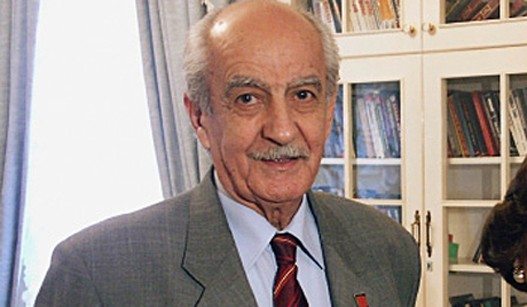
Master Spy Gevork Vartanian dies at 87 – A member of Soviet intelligence.


The Armenian Weekly — Gevork Vartanian, the man largely responsible for foiling Adolf Hitler’s plot to assassinate three Allied leaders—Soviet leader Joseph Stalin, British Prime Minister Winston Churchill, and U.S. President Franklin Roosevelt—at the 1943 Tehran Conference, died at the age of 87 in a Moscow hospital on Jan. 10. He will be buried in Armenia.
Gevork Vartanian 300x174 Master Spy Gevork Vartanian Dies at 87
Gevork Vartanian
Vartanian was the son of an Iranian-Armenian Soviet intelligence agent who operated in Tehran for over two decades under the guise of a successful merchant. The young Vartanian’s spy career started early, when in 1940, at the age of 16, he received his first assignment and the codename Amir. His wife, Gohar, was also a spy—recruited by Vartanian. She worked alongside him for three decades. His work in intelligence continued until the early 90s. The Russian Foreign Intelligence Service revealed Vartanian’s identity only in 2000.
In the fall of 1943, at the age of 19, Vartanian prevented the Nazis from carrying out Operation Long Jump in Tehran. Approved by Hitler, and headed by Ernst Kaltenbrunner, the plot aimed to assassinate Stalin, Roosevelt, and Churchill.
Soviet intelligence agent Nikolai Kuznetsov first uncovered the plan when he posed as an army officer from Nazi-occupied Ukraine, and extracted information from German SS Hans Ulrich von Ortel, known for his drinking.
Vartanian and his group of like-minded youth—all around his age—were known as the “light cavalry.” They were known to travel quick, and light, often on their bicycles.  Aside from Vartanian, the group was comprised of five Armenians, an Assyrian, and a Lezghin. Their task was to conduct surveillance work on Germans and possible Iranian agents. They were responsible for the arrests of around 400 Nazi agents.
On the eve of the Tehran Conference, Vartanian’s team located a group of six German radio operators who had parachuted in near the city of Qum, 40 miles south of Tehran. The “Light Cavalry” followed the Germans to Tehran, where they were in contact with the local German spy network, and maintained contact with Berlin. Vartanian and his team continued to monitor their communications, and it was revealed that the Germans were planning on sending in another group of operatives to carry out the assassination plot. The members of the first group of German operatives were arrested. According to Vartanian, they then allowed one of the German radio operators to contact Berlin with news of the foiled plan. The Germans decided against sending the second group in, and called off the operation.

The mission dubbed "Operation Long Jump",  was put together by SS security, who had learned through a code the place and the date of the summit. But the scheme fell apart when Vartanian and other Soviet agents based in Iran located Nazi commandos. 
In 1955, Vartanian graduated from the Institute of Foreign Languages in Yerevan. He was reportedly fluent in eight languages.
In 2003, Yuri Lvovich Kuznets published a book titled Tehran-43 or Operation Long Jump. The book drew from declassified documents and highlighted Vartanian’s part in the events. In 1981, the Soviet-French film “Tehran 43” was released, and featured French actor Alain Delon. However, much of Vartanian’s career remains a mystery, as most of his work remains classified.
Vartanian received the Gold Star medal of the “Hero of the Soviet Union” in 1984 for his intelligence work during World War II and the Cold War. He received three decorations after his 1943 success: the orders of the Great Patriotic War, the Battle Red Banner, and the Red Star. He was awarded the Order for Services to the Fatherland when he turned 80.


Movie – "Teheran 43" starts in 1980 in Paris. The memories of hero Andrei take the story back to 1943. The Germans planned to assassinate the three men. 37 years later, the German agent Max lives with Françoise, a young Parisian woman, who hides him. But another Nazi, Scherner, is hunting down Max who failed to carry out the planned assassinations. Max trusts Françoise, but he doesn't know that she works for Scherner. Another plot in the movie is the romance between Andrei and the French woman Marie in 1943, followed in 1980.


Sarkisian sends letter of condolence
A day after Vartanian’s death, President Serge Sarkisian sent a letter addressed to Vartanian’s widow, Gohar, family members, and friends. According to the official presidential website, Sarkisian remembered Vartanian as the “worthy son of the Armenian nation,” who had supported Armenia in times of war and strengthened the country’s foreign intelligence service.
“I cherish memories of my meetings and conversations with Gevork Vartanian,” wrote Sarkisian. “He was a great example of a commendable service to the Motherland, constantly open and well-wishing towards the people. Bright and good memory of Gevork Vartanian will remain in the hearts of those who had met with him even if only once. Rita Sargsyan also offers her condolences. We deeply mourn together with you and share your pain.”

Thursday, 19 January 2012

Our Traditions and Customs are Alive and Well

Here is my latest column published in Asbarez newspaper.  

In Tehran, when I was growing up, my father’s side of the family belonged to the Evangelical (ավէտարանական) church, which was founded by Protestant Missionaries from United States in the mid 1800s. The church was situated in the old part of Tehran on Ghavam-Saltaneh street. The few acres of its sprawling grounds included two schools and living quarters for the American missionaries.
Since American missionaries presided over that church, my father's family celebrated Christmas on December 25. My mother’s side belonged to the Armenian Apostolic Church and they observed Christmas on January 6 as most Armenians do.
Usually I can recall things from the past quite well, however I cannot recall exactly how we celebrated on December 25 at my paternal grandmother’s home. But I do remember that the Evangelical church had a youth program where we learned Christmas Carols. My mother was not very keen about the program and didn’t want me to participate, because it was conducted in Farsi and our peers and instructors were proselytized Muslims. However, I loved these church activities and have many fond memories of our outings and all other programs.
In the days before December 25 at the youth program, we learned Christmas carols that were translated into Farsi.  We also learned carols in English.  Leading up to Christmas, the elders of the church drove us around in cars to visit different Christian homes so we could go caroling. Today, hearing Christmas Carols, takes my mind to the youth program. Without question singing Carols is a memory that I always will cherish it. I’m glad that I didn’t obey my mom and insisted to participate in the youth program.
In Tehran, the celebration of Christmas was not big. New Year’s Eve was the excuse for major festivities.  All the hoopla, the gift giving, the decorations, the “Holiday Tree – տօնաձառwere for celebrating the New Year, not Christmas. Santa came on New Year’s Eve and we opened our gifts on the New Year’s Day.
I sometimes think that it would have been so much better, if, here in the “West,” Santa would come for the New Year instead of Christmas.  Then all children from every religion could enjoy the charm of Santa Claus. In reality, what does Santa have to do with the birth of Jesus?
Back to my memories of Armenian Christmas in Tehran: On January 5 we had our Christmas dinner around the table at my maternal grandmother’s home. The traditional food included smoked fish, pilaf and koukou. We had the same menu for Easter too. I’m not sure how the dish became the traditional menu of Iranian-Armenians.  I think the koukou (a cake of greens & eggs) and the pilaf were adopted from Persian cuisine, and fish is a staple of Armenian tradition.  Red wine was always present on the table and the “holy-cracker նշխարք” was brought from church and was cracked and served in the wine. The tradition also dictated to burn incense (խունկ- Frankincense) Which I love the smell of it.  Another custom that has fazed-out was after Christmas and Easter for almost two weeks priests would visit the homes and bless them.
Christmas and Easter dinners have occupied an important part in our culture, however the observation of those holidays has been more as keeping the tradition than the religious aspect. At least that's what in our family has been.


During dinner our elders told us stories about how they celebrated the holy days in old times.  My Mom always recalls that her father insisted that for Christmas the dinner could be served after the sun set but Easter dinner had to be served while the sun was still up. My grandfather was born in a village and his family moved to Tabriz when he was young.  So the comment that my mother remembers from his father tells me that Armenians living in villages in Iran, also kept the tradition of having Christmas and Easter dinner.
The best part of the Christmas was when on January 6 we had the home ready for visitors.  It was a tradition that the women stayed at home and men went from home to home to visit and celebrate the advent of Christmas and the New Year. Our relatives and friends came for a short visit just to keep the tradition and to say Merry Christmas – they had a shot of brandy and had a chocolate and off they went to the next home.  Sometimes they brought their kids with them, and that’s how we stayed in touch with distant relatives.
My dad was a translator and worked with mostly Jewish and Muslim merchants.  On January 6th, all his clients came to visit us.  The house had such a festive spirit.  We were dressed in our best clothes and the house was decorated "to the T" and the food was overflowing. Dad’s clients brought us nice expensive gifts, such as huge vases, bowls, platters and trays of silver sterling or hand-painted miniatures in rich marquetry (khatam-kari) frames.  We kids received gold coins.  Usually Dad was not home because according to the tradition he had to visit other relatives but Mom received the visitors graciously.
Two years ago I had the opportunity to walk from my home to my Mom’s for “Jour-orhnek” dinner – Blessed-water – that’s what we call the Armenian Christmas.  To get to her home I had to cross small residential streets in Glendale. While walking, it was so fun to peek through the windows and see some dinner tables ready inside the homes. The mood was so festive. I noticed people arriving by car or on foot, with their hands full of gifts or dishes of food that they had prepared.  I could even smell the burning of the incense while passing by those homes. It is needless to say because it is an Armenian hallmark: women were coiffed beautifully and men were in their best suits. I was overjoyed to see how in these “Odar aperoom,” (on the foreign shores) we Armenians are thriving and the traditions are alive and well. I can see without question that our next generation will continue the customs that we have brought with us from the old countries.

The Costa Concordia Disaster...

The Capsized Costa Concordia Ship’s Missing Passenger Found Alive. 


On January 13, 2012, the Italian cruise ship Costa Concordia sank partially by hitting a riff on the western coast of Italy in Tuscany. Of the 4,200 passengers and crew, at least eleven people were killed, including ten passengers and one crew member and 21 still missing. The situation is still ongoing. The ship is currently capsized off the coast and at high risk of falling into deeper waters and sinking.

A German woman presumed missing and still be trapped on board of Costa Concordia was found safe and sound on Thursday 1/18 in Germany – reports MSNBC. According to The Mirror, Gertrud Goergens walked into a police station in Germany to report her safety. Now, 21 people are still unaccounted for, including a Minnesota couple. 

"vigil of hope" was held Tuesday evening for Jerry and Barbara Heil in their town of White Bear Lake in Minnesota. According to CNN, a prayer service will be held Wednesday night at St. Pius X Catholic Church.
Five more bodies were pulled from the wreckage on Tuesday. The body of Sandor Feher, a 38-year-old Hungarian violinist who had been working as an entertainer on the ship, was pulled from the wreckage on Wednesday.
The Costa Concordia's surviving passengers from around the world have joined a class action lawsuit against the cruise line. A French couple is also collecting signatures for their suit against the tour operator.

Captain of the Costa Concordia, Francescino Schettino, currently under house arrest, was seen drinking and chatting with a young Moldovan woman only a couple of hours before the ship ran aground. Criminal charges including manslaughter and abandoning ship are expected to be filed by prosecutors. Schettino faces a possible 12 years in prison on the abandoning ship charge alone.

Italian rescue workers suspended operations early Wednesday after the ship shifted slightly on the rocks, creating concerns about the safety of divers and firefighters searching for the missing. The search was resumed on Thursday.


Wednesday, 18 January 2012

AROUND TOWN – The Yellow Ribbon Week

Tie a Yellow Ribbon


Today as I was driving down on Chevy Chase, I noticed on the corner of Wilson and Chevy Chase avenues the fence of John Marshall elementary school all tied with yellow ribbons.  The pretty site took me back to the days that my kids were young and I was involved with the schools and the PTA.  On those days we only had the celebration of the red ribbon week, which was a drug prevention week. 
The Yellow Ribbon Week or the non-violence week is a creation of a nonprofit organization founded in 1997 and located in Salem Oregon called The Hands & Words Are Not For Hurting Project. The mission of the Hands & Words Project is to educate students in every community about their moral and legal right to live free of abuse and violence.

For the past eight years, Glendale Unified School District has observed Yellow Ribbon Week by providing yellow ribbons as a symbol that the students and staff members work to solve problems without violence. The week is also in remembrance of those who have died on campuses in violent situations.

The Yellow Ribbon Week is being recognized during the third week of January at Glendale Unified School District which coincides with the week of Dr. Martin Luther King Jr.’s Birthday.
It is so heartwarming to see all these wonderful projects available to our kids.  

Tuesday, 10 January 2012

AROUND TOWN – Bank of Amerca's automated teller on Doran Ave in Glendale...

Can you believe this traffic is on Sunday evening at 5:30 P.M.??


Next to my Gym, where I go to workout, there is a Bank of America drive up automated teller.  Last Sunday January 8, around 5:30 pm when I was leaving the gym I noticed so many cars lined up to pick up money from the automated teller.  It was so unusual to see such a crowd at the lot at that time of the day.  I took a picture to share with my readers.  I cannot figure out what was the rush for.  Maybe you have a better idea. You cannot see well in the picture but there were eight cars in the lot.

Sunday, 8 January 2012

Gabrielle Giffords, BACK ON HER FEET, leads candlelight vigil for the first anniversary of Arizona shooting

What a smile!  Isn't this awe inspiring??
I was just mesmerized when I saw Gabby Giffords, on TV, walk to the podium to lead a candlelight vigil for those who were killed in the shooting spree of the last year.


"Rep. Giffords was shot in the head by a gunman in January and has progressed more than anyone could have imagined." 


The recovery of Representative Gabrielle Giffords after being shot in head is awe inspiring and nothing short of a miracle.  The story boggles the mind.  Here is another milestone in her recovery.  
Arizona Representative Giffords smiles after reciting the Pledge of Allegiance at a memorial service . It is hard to believe that she was shot in the head

A year after a deadly shooting spree that left Congresswoman Gabrielle Giffords battling for her life, the accused gunman Jared Loughner remains shut up in a prison hospital amid wrangling over his fitness to stand trial.


The Telegraph – Thousands gathered for the memorial service in the University of Arizona to remember those killed when 23-year-old Jared Lee Loughner opened fire indiscriminately in a Safeway supermarket last year.
Six people were killed in the rampage and 13 people wounded, including Congresswoman Giffords. Among the people killed were nine-year-old Christina Green, Miss Giffords's aide Gabe Zimmerman, US District Judge John Roll, 76-year-old Dorothy Morris, 76-year-old Dorwan Stoddard, and 79-year-old Phyllis Schneck.
Her appearance drew a rousing applause from the thousands of people who were watching.


As Miss Giffords, 41, who is still recovering from her injuries, stepped up onto the podium to lead a recitation of the American pledge of Allegiance, she waved and smiled at the crowd. When she spoke, she added emphasis to the final few words, "with liberty and justice for all."

Nineteen candles were lit in tribute to all those affected by the attack

Children laid flowers and candles and around 30 others rang hand-held bells at 10.11am local time to mark the exact time of the shooting. Many bowed their heads in prayer.
"We remember, we remember, we remember with grateful hearts," those gathered chanted together, standing, many closing their eyes.
A day before the memorial, Miss Giffords visited the Safeway supermarket where she was shot in the head that fateful morning. She was pictured pointing at where she had parked the morning of the attack.
Jared Lee Loughner has pleaded not guilty to 49 charges and is being forcibly medicated for bipolar disorder at a mental facility in a Missouri prison in an effort to make him fit to stand trial.