Total Pageviews

Sunday, 26 February 2012

Lovely Pictures of Love Birds

To end February, the month of LOVE, I've chosen the following pictures of LOVE BIRDS – ENJOY

Celebrity Caricatures by a young Iranian Deaf Artist – Alireza Bagheri

Alireza Bagheri is a 20 year-old young artist born in Gorgan, a province of Iran.  I think he has accomplished an incredible mastery of the art of caricature at a very young age – you be the judge.


Albert Einstein
Barack Obama
Mr. Bean
Condoleezza Rice
Bruce Lee

Saturday, 25 February 2012

Bari-Kentan, an Armenian Tradition


Time goes by so fast and I find myself falling behind in completing all my planned posts on my blog.  February is almost over, and I had planned to post two more stories before the end of the month. 

Last weekend I came down with a stomach flu. Since then, I've been under the weather and unable to write. Blogging has kept me very busy. Sometimes I think why do I bother so much to write but then the encouragement of my peers gives me fuel to keep the engine running. Now I know what a tough job reporters, journalists or authors have.  


According to Catholicism "Mardi Gras," which is the French way of saying Fat Tuesday, is the last day of eating fatty animal foods before the ritual of fasting for Lent begins.  In Armenian tradition, this day is actually the Sunday before Fat Tuesday.  We call it "Bari Kentan," meaning Good Life.  

According to Roman Catholic Church, Ash Wednesday derives its name from the practice of placing ashes on the foreheads of practitioners as a sign of mourning and repentance to God. The ashes that are used at the Wednesday mass are gathered after the palm from the previous year's of Palm Sunday are burned.  

But since I'm not a Catholic, I'd like to use my mother's theory of why they say Ash Wednesday.  She says in old days, ash was used to clean pots and pans. So, the day after Fat Tuesday, on Wednesday, people cleaned every residue of animal food from their utensils, by using ashes.  And that's how the day came to be called Ash Wednesday. You may choose your own version, depending on how you look at things.

In Armenian culture, "bari-kentan" the last day before Lent, the same as in Western culture, has been marked with festivities, good food and even a masquerade. 


There is also another tradition in our culture that has passed down from our elders to us. And when we were young in Iran we have enjoyed it a lot.  It is to tie the feet of an elder male (a grandpa) and hit them with tree branches and ask them for money. It was a fun tradition but since we moved to these foreign shores, America, we have not kept the tradition of celebrating "Bari-Kentan." And I guess my kids don't know about the tradition. 

One of our famous writers Hovaness Toumanian who lived in late 1800s has a little story called "Bari-Kentan." The story goes: One day a husband brings home sacks of food (rice and beans) and tells his young wife that the food is for Bari-Kentan. The wife not knowing what Bari-Kentan means, (I guess not in every village celebrated the feast) thinks that it is someone's name.  So, she waits for couple of weeks and Bari-Kentan doesn't show up to pick up his food.  

One day when she was at the door, notices a man coming towards their home, he assumes that, he must be the guy who has to pick up the food.  She asks the stranger, if he's Bari-Kentan who is supposed to pick up the food. 

The man, realizing that the woman is in fault, says that indeed he is Bari-Kentan who has come to pick up the food. So the woman hands sacks of food to this stranger and he goes away.  In the evening when the husband comes home, happily, she tells him that Bari-Kentan came for his food and that she gave him all the food and he took it away. You may very well imagine what the reaction of the husband could be. This is one of the favorite stories that my grandmother used to tell us and I wanted to hear it over and over again.

Pope Benedict receiving Penitential Ahes

Wednesday, 22 February 2012

AMERICAN War Reporter, Marie Colvin, Dead in an ambush in Syria

This morning I woke up to a tragic news: Respected American journalist, Marie Colvin, who spent decades reporting on conflicts from Sri Lanka to Syria, focusing on the suffering of women and children in wartime, died in a fierce shelling attack in Syria.


Colvin, who was 57, was known for her courage behind the front lines and immediately recognizable for an eye patch that hid an injury suffered in a Sri Lankan ambush. She had been holed up in the besieged Syrian city of Homs. Sunday Times editor John Witherow confirmed her death during a "devastating bombardment by the Syrian army."
French photojournalist Remi Ochlik died alongside Colvin, the French government announced. Freelance photographer Paul Conroy and journalist Edith Bouvier of Le Figaro were wounded, according to Witherow and Le Figaro.
Colvin, from Oyster Bay, New York, had been a foreign correspondent for Britain's Sunday Times for the past two decades, making a specialty of reporting from the world's most dangerous places. Her final dispatch Tuesday from a cellar offering refuge for women and children hinted at the horrors that eventually took her own life.
"It is a city of the cold and hungry, echoing to exploding shells and bursts of gunfire," she wrote. "There are no telephones and the electricity has been cut off. ... Freezing rain fills potholes and snow drifts in through windows empty of glass. No shops are open, so families are sharing what they have with relatives and neighbors. Many of the dead and injured are those who risked foraging for food.
"Fearing the snipers' merciless eyes, families resorted last week to throwing bread across rooftops, or breaking through communal walls to pass unseen."
Colvin often focused on the plight of women and children in battles and Syria was no different. She gave interviews to major British broadcasters on the eve of her death, appealing for the world to notice the slaughter taking place.
It boggles the mind how people sacrifice their lives to bring justice to this Unjust World... I'm trying to raise awareness by posting this snippet, gathered from Internet. 

Tuesday, 21 February 2012

INTERNATIONAL MOTHER LANGUAGE DAY... FEBRUARY 21

Nelson Mandela once said that “if you talk to a man in a language he understands, that goes to his head. If you talk to him in his language, that goes to his heart”. The language of our thoughts and our emotions is our most valuable asset. Multilingualism is our ally in ensuring quality education for all, in promoting inclusion and in combating discrimination. Building genuine dialogue is premised on respect for languages. Each representation of a better life, each development goal is expressed in a language, with specific words to bring it to life and communicate it. Languages are who we are; by protecting them, we protect ourselves.


Did you know February 21 is the International Mother Language Day?  Learn a slice of History


International Mother Language Day has been observed every year since February 2000 to promote linguistic and cultural diversity and multilingualism. The date represents the day in 1952 when students demonstrating for recognition of their language, Bangla, as one of the two national languages of the then Pakistan, were shot and killed by police in Dhaka, the capital of what is now Bangladesh.


Languages are the most powerful instruments of preserving and developing our tangible and intangible heritage. All moves to promote the dissemination of mother tongues will serve not only to encourage linguistic diversity and multilingual education but also to develop fuller awareness of linguistic and cultural traditions throughout the world and to inspire solidarity based on understanding, tolerance and dialogue.


International Mother Language Day was proclaimed by the General Conference of the United Nations Educational, Scientific and Cultural Organization (UNESCO) in November 1999 (30C/62).

Monday, 20 February 2012

Abraham Lincoln


Today is Presidents Day (or, as we used to call it, Lincoln’s Birthday). That makes it a good time to talk about one of the great anomalies in Presidential history: the fact that President Abraham Lincoln, our Commander in Chief during our bloodiest war, took the time to review over 1,600 cases of military convictions during his 1,503 days in office, and that Lincoln pardoned a myriad of soldiers condemned to death.

In one case of desertion, President Lincoln said: “If a man had more than one life, I think a little hanging would not hurt this one; but after he is once dead we cannot bring him back, no matter how sorry we may be; so the boy shall be pardoned.”

In another case, the soldier’s father went to the White House to beg for mercy for him. President Lincoln, who had never met the father before, greeted him as “my old friend.” Lincoln listened to the father, and then wrote out on a piece of paper: “Job Smith is not to be shot until further orders from me – ABRAHAM LINCOLN.” The father started to cry, but he asked Lincoln why he had phrased it this way. Lincoln said: “If your son never looks on death till further orders come from me to shoot him, he will live to be a great deal older than Methuselah.”

Lincoln refused to release a slave trader from prison, however, despite a personal appeal from an influential Congressman. “If this man were guilty of the foulest murder that the arm of man could perpetrate, I might forgive him on such an appeal; but the man who could go to Africa, and rob her of her children, and sell them into interminable bondage, with no other motive that that which is furnished by dollars and cents, is so much worse than the most depraved murderer, that he can never receive a pardon at my hands. No!”

Yet time after time, President Lincoln pardoned soldiers who had been sentenced to death for sleeping during sentry duty, desertion, and even treason. Lincoln called the desertion convictions his “leg cases”: “If Almighty God gives a man a cowardly pair of legs, how can he help their running away with him?”

And why did Lincoln show this mercy? Because over 600,000 people died during the Civil War, more than one out of every 50 Americans. And Lincoln thought that that was more than enough death. As journalist David Locke said: “No man on earth hated blood as Lincoln did.”
(The above text was gathered from Internet)

THE TALK OF THE TOWN - Baby Boom – World's 7 billionth BABY is born in Manila, Philippines

Meet the 7 billionth Baby:

On October 31 of last year I received an email from the executive director of UNA-USA, Patrick Madden, informing the coming of the 7 billionth child.  A week before I had also read in TIMES magazine about the anticipation of the 7 billionth baby.  I decided to post it on my blog, as soon as the baby was identified, but then I put it on back burners and forgot all about it.  Until today when I was cleaning my inbox and came uponemail.  Here is the email and the news from the arrival of the baby.


Dear UNA-USA Members:
Our world is growing exponentially. Today, the world welcomes the birth of the 7 billionth child. With this in mind, it is more important than ever that we answer critical questions regarding population, health and sustainability. How these issues are addressed could determine whether that child lives in a safe, healthy and sustainable world — or one of insecurity, disease and instability.

Nations are facing population growth and shifts we haven’t seen before. Across the globe countries are seeking to address the health and environmental sustainability impacts of human development. Investments in international family planning contribute to a host of positive health and development outcomes, including the promotion of healthy, productive families and communities, environmental sustainability, and resource and food security.


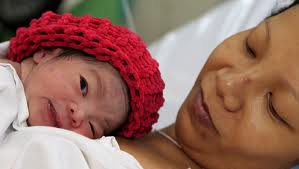
MANILA, Philippines (AP) — She came into the world at two minutes before midnight, a tiny, wrinkled girl born into a struggling Manila family. On Monday, she became a symbol of the world'spopulation reaching 7 billion people and all the worries that entails for the planet's future.


Weighing 2.5kg (5.5lb), Danica May Camacho was chosen by the United Nations to be one of several children around the world who will symbolically represent the global population milestone.
She was delivered just before midnight on Sunday amid an explosion of press camera flashes at Manila's Jose Fabella Memorial Hospital.
"She looks so lovely," her mother, Camille Dalura, whispered softly as she cradled her tiny newborn.
"I can't believe she is the world's seven billionth."
Danica's name means morning star. She is a second child for Camille Dalura and Florante Camacho.
The parents and the baby were met by officials from the UN, which named 31 October Seven Billion Day, aiming to draw attention to the challenges of the world's growing population.
The accuracy of the projection has been questioned, with some groups arguing that the figure is more likely to be reached next year.
UN officials nevertheless presented the baby and her parents with a small cake as she lay on her mother's chest wearing a knitted red hat.
The family also received a scholarship grant for Danica's education from wellwishers and some money to help them open a shop.
Previous children picked out at birth by the UN to mark world population milestones have complained that the international body forgot about them later in life.
Both 12-year-old Adnan Nevic of Bosnia Herzogovina, the sixth billionth baby, and Matej Gaspar from Croatia, who was number five billion, have complained that the UN chose them at birth then largely ignored them.
"We saw Kofi Annan as almost like a godfather to him," Adnan's father, Jasminko, told the Guardian.
Adnan said: "He held me up when I was two days old but since then we have heard nothing from them."
The UN Population Fund hopes to raise awareness about reproductive health, women's rights and inequality through the campaign.
Countries around the world have held celebrations to mark the occasion, including a song contest in Zambia and a concert in Vietnam.
The Philippines has 94.9 million people, according to a UN report, and 10% of girls aged 15 to 19 have been pregnant.
Enrique Ona, the country's health secretary, said the birth offered his country an opportunity to address population-related problems.